

You’re working extremely hard. You keep trying to earn more money. But with inflation pushing everything up, it feels like you’re making no progress financially.
For many people, their paycheck lands in their account, and before they can even think about it, it’s already spoken for. Rent. Groceries. Gas. Insurance. You know the list.
Everything costs more. And you’re left wondering, is it just me, or is everyone barely making it right now?
The answer? It’s not just you.
I’m not an economist, and I won’t pretend this is a list of steps that will make you a millionaire. What I want to give you is some practical help, and more than that, some hope. Inflation is real and it’s heavy, but it doesn’t get the final word.
Getting to the Root of the Problem
Most financial advice tells you what to do with your money. It rarely asks what’s going on in your heart. These tips come from the heart, and from Scripture, because I’ve found that when God changes our hearts, it ends up changing how we spend, too. A heart that’s content usually saves a lot of money without even trying.
This isn’t about squeezing every penny. It’s about learning, even with less, to enjoy life more. To be content because our peace is rooted in God, and our purpose is rooted in God. Always focusing on money wears us out, and Proverbs warned about that long before any of us had a budget app.
“Do not wear yourself out to get rich; do not trust your own cleverness. Cast but a glance at riches, and they are gone, for they will surely sprout wings and fly off to the sky like an eagle.”
Proverbs 23:4-5 (NIV)
Here’s something I’ve noticed in my own life, and I say it carefully. The seasons when I focused less on money, and more on serving God and serving others well, have been the seasons where God provided the most. That’s not a health and wealth promise. God isn’t a vending machine. It’s just what I’ve watched happen, and it lines up with what Proverbs says: “One person gives freely, yet gains even more; another withholds unduly, but comes to poverty” (Proverbs 11:24). When we grip money tightly, it has a way of slipping right through our hands.
So let me walk you through some of the most important steps. Some are practical. Some are heart work we all need, me included.
Finding Peace and Contentment
If we’re talking about ways to have more financial security, I would be remiss not to talk about contentment first and foremost. And I don’t say that to talk down to you like I’m a parent and you’re a child, but it’s a message that many of us, myself included, need to continue to reevaluate.
We live in a time when we’re constantly being sold more. More stuff. More experiences. More everything. And a lot of us have fallen into the trap of thinking that the next thing will make us happy.
It won’t.
“Keep your lives free from the love of money and be content with what you have, because God has said, ‘Never will I leave you; never will I forsake you.'”
Hebrews 13:5 (NIV)
Learning to enjoy simple things isn’t about deprivation. It’s about freedom. My family figured this out years ago. We do some fun things, and we save up for road trips when we can. But most of the time? We’re at home. Playing board games. Watching movies. Going to parks. Hanging out in the backyard.

And you know what? Those are the memories my kids talk about. They talk about relationships and quality time, not materialistic things or expensive experiences just for the sake of being fancy or elegant.
Teaching yourself and your family to be content with simple pleasures doesn’t just save money in a season of inflation. It makes life richer. You stop chasing. You start enjoying.
Being Honest About Your Habits
If you’ve got an expensive hobby, whether it’s shoes, tech gadgets, cars or whatever, it’s time to evaluate. I’m not saying you can’t have any fun or nice things. But excessive spending on material possessions isn’t just hurting your wallet.
It’s actually making the inflation problem worse for everyone. When we keep buying things we don’t really need, we’re signaling to companies that they can keep raising prices.
Investing Your Money
“How can I invest when I’m barely getting by?” I get it. But here’s the truth: money you just save loses value over time because of inflation.
I use simple platforms that let you set up automatic contributions to a high-yield cash account or investment portfolio. Over the years, those small amounts have added up. And that money hasn’t lost value like it would have sitting in a regular account.
You don’t need to be wealthy to start. You just need to start.
The Power of Community
This isn’t something people usually bring up in conversations about money, because so much of our culture pushes us to do everything on our own. But this one is so valuable.
And being a Christian, I won’t pretend like there’s any other better community to be a part of than a loving, welcoming, Bible-teaching, gospel-centered local church. I could offer no better advice than a community that could provide that type of help. And it’s not just financial, it’s emotional, spiritual, and practical support in every area of life.
But you can also be more family, friends, and community-minded as well. One example is I learned to work on cars because I knew with six kids, we’d have a lot of vehicles in our future. Now my kids borrow my tools. Friends borrow my tools. And when I need help? People show up.
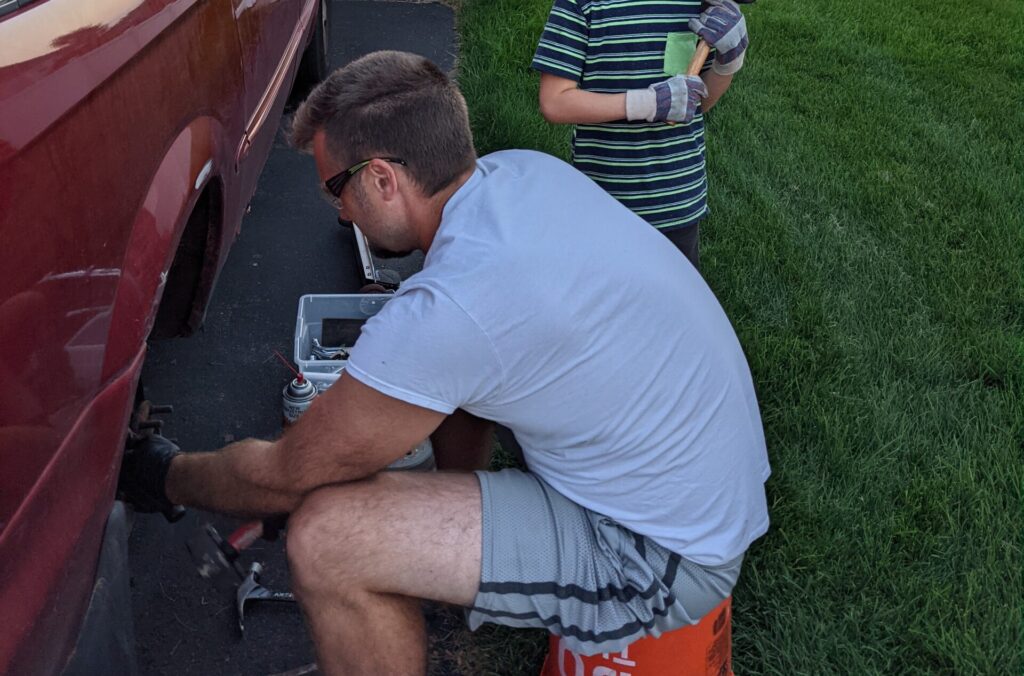
That’s how God designed us to live – not isolated, trying to do everything ourselves, but together.
“Two are better than one, because they have a good return for their labor: If either of them falls down, one can help the other up.”
Ecclesiastes 4:9-10 (NIV)
Building an Emergency Fund
If you haven’t learned this lesson yet, you will, and usually the hard way. Life happens. Cars break down. Medical bills come. You need a cushion.
From all the years of research I’ve done and what I’ve learned from financial consultants, the safest amount to have in an emergency fund is truly a year’s worth of expenses. And I know that takes a very long time to get to, and that should absolutely be in a high-yield savings account that’s earning, for sure, more than the current inflation rate in interest.
This is what I’ve been encouraging my boys to do as they launch out into life and get married. Start an emergency fund, even if it starts small. Be gracious with yourself about how small it is at first. It still helps, and it grows.
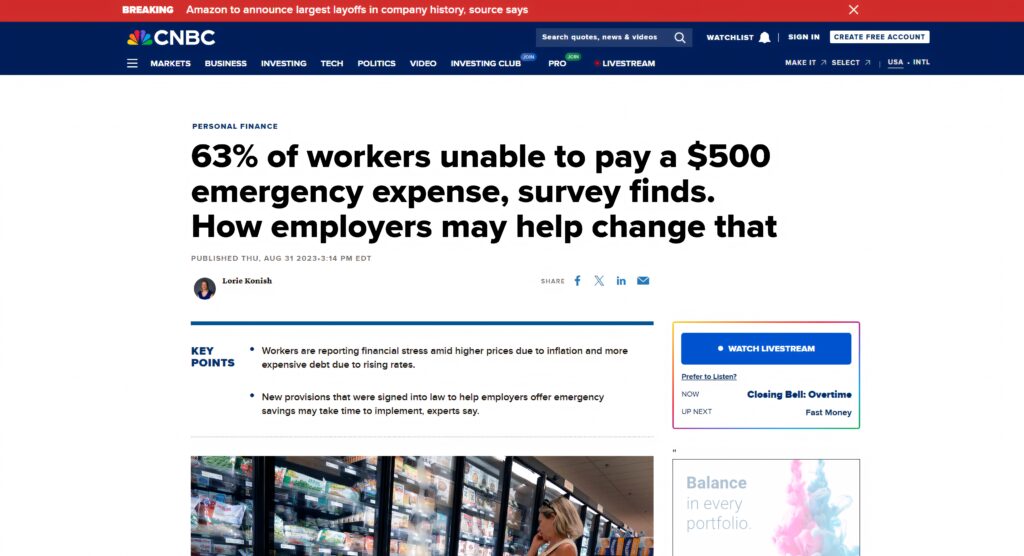
So don’t underestimate the goal of starting and having a set-aside account. And there’s nothing to be ashamed of in just getting started. If your first goal is to get $100 saved in there, that’s awesome. If you reach $500, that’s awesome. One survey found 63% of workers couldn’t cover a $500 emergency expense, so having $500 set aside already puts you ahead of a lot of people. With $1,000, you can handle a more significant short-term emergency.
So don’t underestimate those smaller numbers. When you hear that someone has a year’s worth put away in an emergency fund, that takes time to get to. But it’s about building the right habits. As Proverbs 21:20 puts it, “The wise store up choice food and olive oil, but fools gulp theirs down.”
Eliminating Debt
I completely subscribe to Dave Ramsey’s debt snowball, which is to pay off your smallest debt first, and then snowball what you were paying on that into the next one. It’s not very complicated, but it’s a habit that, if built correctly, will start to destroy the debt you have.
When inflation pushes everything up, debt only gets heavier. And you have to make sure you have the mindset of not wanting to stay there. You can’t keep just adding things on a credit card – that’s not money you have. Don’t take out loans. I would say minus a mortgage and a car payment if necessary. But if you’re in a place where you can’t buy a car outright, make sure you’re not getting a loan on a brand-new car. Make sure you’re getting a loan on a used car that’s significantly cheaper, that you could pay off much sooner, and will still last you almost as long as the other one.
Proverbs 22:7 is blunt about why this matters: “The borrower is slave to the lender.” It’s those kinds of decisions we need to make. Make a plan. Stay consistent. Get it done.
Diversifying Your Income
A lot of financial principles aren’t that hard to understand. It’s a matter of putting them into action. I realized the most important thing about income streams is to increase your income. So how do you do that? You have to provide increasing value to people.
For me, it was increasing my value to my clients that I had and the new clients I acquired. I learned more skills, web design, online marketing, and strategy, so that I could do more for them while still at a fraction of the cost of hiring multiple employees to do those different jobs. They could pay me more because I can do a variety of them very well.
I’ve learned that a jack of all trades within a smaller subset of skills that you learn really well earns more than a jack of all trades that’s too generalized, doing everything mediocre, or a person who is too specific in just one area. The sweet spot is right in the middle. Took me 20 years to learn that, so I hope that can benefit you.
Playing the Long Game
Here’s the hard truth: inflation probably isn’t going away. Housing supply issues and construction costs continue to drive shelter inflation, keeping overall inflation elevated. Waiting for things to “go back to normal” isn’t a strategy.
What works is habits. The small financial habits you build today (whether they’re good or bad) will shape where you’re in 10, 20, 30 years.
“Dishonest money dwindles away, but whoever gathers money little by little makes it grow.”
Proverbs 13:11 (NIV)
So please hear me out when I say that if you’re struggling right now, whatever your age, I don’t fault you for that. Living in the United States is expensive. Like, really expensive.
Yes, we need to remember that we live better than the majority of the world. I mean, even the poorest of us live like kings, especially in this day and age. So we have to be realistic that while it’s expensive, we do have it really good. So we should be grateful for that. But it doesn’t mean the struggle isn’t real, and the stress that comes with that.
So let’s stop playing the comparison game. Stop scrolling through social media, TikTok, Pinterest, and unintentionally feeding the jealousy or discontentment from what other people have that you don’t have.
Just focus on what you can control. Truly learn to be content with what you have. Look around and just be thankful for what God’s given you. The material things don’t really matter in the long run. It’s the people. It’s the relationships that matter beyond this life.
So build those good habits. Serve other people well. And you can trust that over time, I’ve seen it in my own life, those decisions, the way we honor God and steward the finances that he gives us well, it does add up.
And with that, I ask you, what will you do with these 24 hours that you’ve been given?