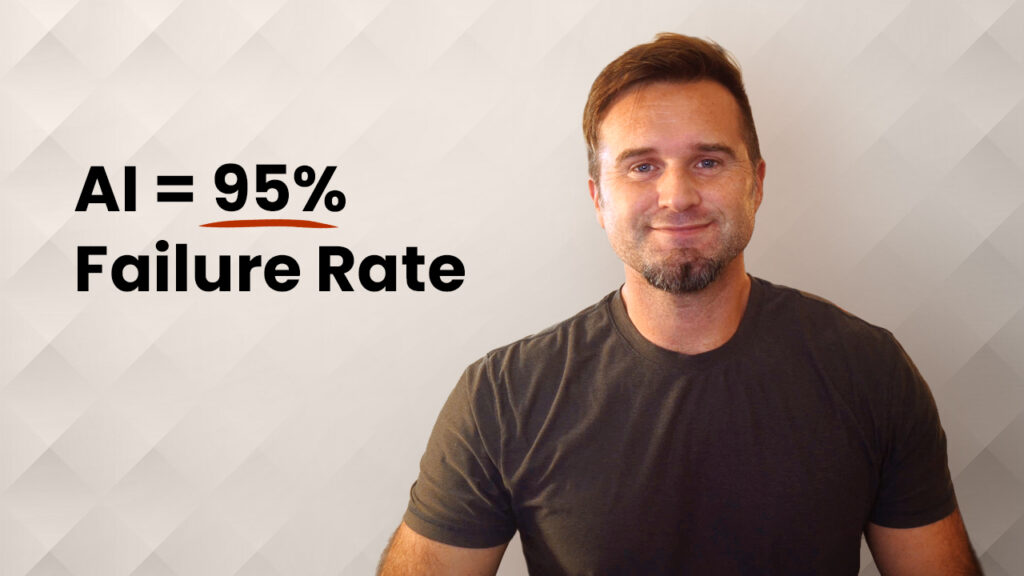
When I first wrote this in 2025, AI was everywhere. Every headline, every conference, every boss with a new plan. And the early results were not what we had been promised. A report out of MIT that year found that about 95% of the generative AI pilots it studied at large companies had not produced measurable returns.
By the time you read this, the numbers may look very different. The tools will have changed. Some will be better, and some promises will still be waiting. That is the nature of technology. It moves. But if you have been anxious about what AI means for your job, your future or your worth, there is something underneath all of it that does not move. That is what I want to talk about here: what AI can’t do, and what that tells us about how God made you.
The Hype and the Reality, as I Saw It Then
At the time of this writing, the gap between the promise and the payoff was hard to ignore. Companies had poured an estimated 30 to 40 billion dollars into generative AI with very little to show for it, and analysts were openly asking how the industry would ever earn back what it was spending.
The writer Cory Doctorow put the real danger in one sentence, and it has less to do with what AI can’t do than with what people believe it can.
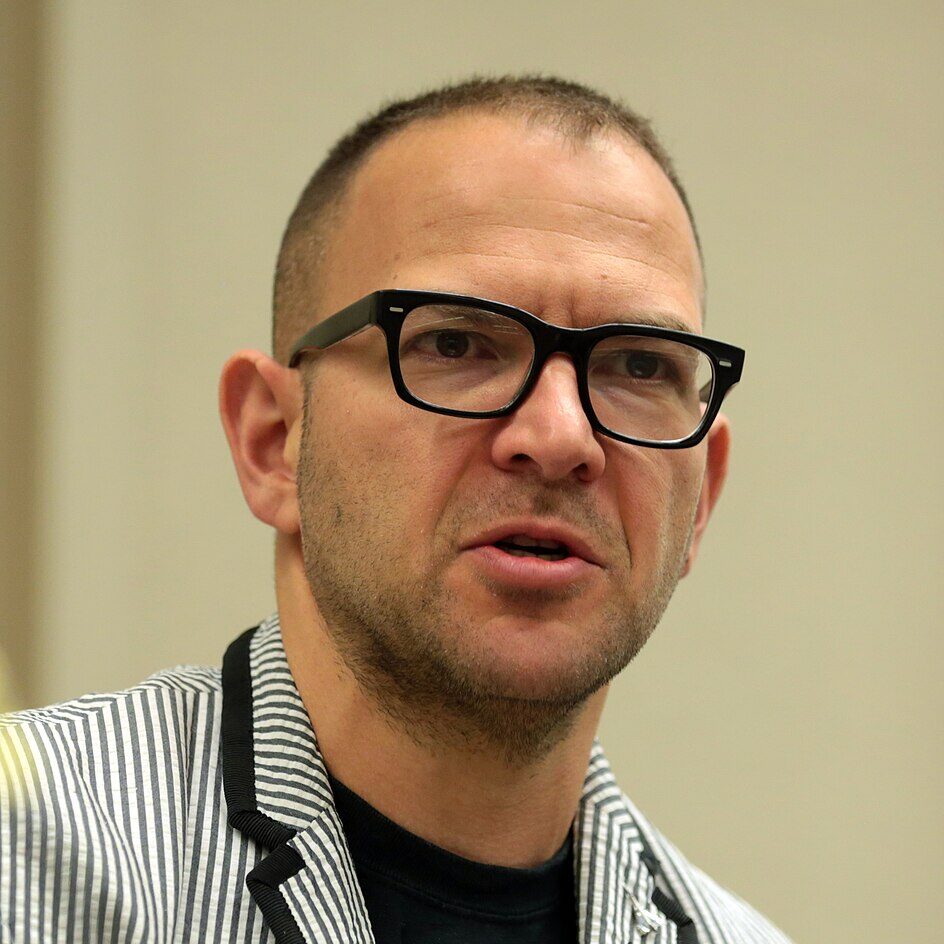
“AI can’t do your job, but an AI salesman can convince your boss to fire you and replace you with a chatbot that can’t do your job.”
Cory Doctorow
To be fair, AI as a tool is useful in certain areas. Nobody is arguing otherwise. What I noticed then was that much of it was leveling work down to mediocre, faster. Whether that changes or not, the wise response stays the same: “The simple believe anything, but the prudent give thought to their steps” (Proverbs 14:15).
What AI Can’t Do Tells Us How God Made Us
Here is how these tools work, at least as they are built today. Tools like ChatGPT are large language models. They do not understand anything the way you and I do. They analyze massive amounts of text and predict what word should come next based on probability. It is like someone who has memorized every conversation ever recorded but has never lived a single day of their own life.
That is why so much AI-generated content feels hollow. It misses the deeper purpose of why something is being written in the first place. It cannot draw from lived experience, because it has never lived.
For us, something very different happens when we truly understand something. We know why it is true. We can explain it. We can adapt it to new situations. There is a process where something moves from our head, where it can bounce around for a long time, down into our heart, where it becomes belief and then turns into action. No algorithm does that. That is a big part of what AI can’t do, and it is no accident. David said it well: “I praise You because I am fearfully and wonderfully made” (Psalm 139:14).
God Declared What We Were Made For From the Beginning
Before anything went wrong in the garden, God looked at the man He had made and said this:
“It is not good for the man to be alone.”
Genesis 2:18 (NIV)
We were created for relationship. First with God, and then with each other. The two greatest commandments Jesus gave are both about relationship. Love God with everything you have. Love your neighbor as yourself. That is the blueprint for how human beings function, and relationship sits at the top of the list of what AI can’t do.
That design is why the work people value most almost always has a relational heart. When you go to a restaurant, you are not just paying for food. You are paying for the experience, the atmosphere, the feeling of being cared for. When you hire a contractor, you want someone who listens, who adapts when something unexpected comes up, who sees your vision, and who you can trust to do the right thing when it counts. That trust and that care are human. AI can mimic pieces of it, but it cannot replace our need to connect with a real person.
A Modern Tower of Babel
There is a story in Genesis 11 that fits this moment almost too well. After the flood, the whole world had one language. People settled on a plain in Shinar, in ancient Mesopotamia, and they learned to make fired bricks and use tar for mortar. That was cutting-edge technology at the time. And with it came a plan.
“Come, let us build ourselves a city, with a tower that reaches to the heavens, so that we may make a name for ourselves; otherwise we will be scattered over the face of the whole earth.”
Genesis 11:4 (NIV)
Notice what they wanted. Not just a tower. A name. Security. A way to reach the heavens on their own terms, without needing God. So the Lord came down to see the city they were building. He confused their language, scattered them over the face of the earth, and they stopped building the city.
The technology was never the sin. Bricks are not evil, and neither is software. The problem was the heart behind it, the belief that what we build can take the place of God. When people treat AI as the answer to every human problem, handing over their creativity, their thinking and even their relationships, it starts to look a lot like Shinar.
We have seen a version of this before. Social media was supposed to deepen our relationships and make us feel more connected. For many of us it left us lonelier, more anxious and more divided, because it was never real relationship. It was a simulation of it. Any tool built mainly to capture our attention will carry that same risk. God’s ways are simply higher: “For as the heavens are higher than the earth, so are My ways higher than your ways and My thoughts than your thoughts” (Isaiah 55:9 ESV).
What This Means for Your Work and Your Future
Here is the hopeful part, and it holds no matter how far the technology goes. Tools change, and some jobs change with them. That has been true since the printing press. But work that depends on real human insight, creativity and relationship has always had a place, because it comes from how God made us. In a world flooded with automated answers, a real person who listens and cares stands out more, not less.
“Whatever you do, work at it with all your heart, as working for the Lord, not for human masters.”
Colossians 3:23 (NIV)
Work is not just a paycheck. It is serving God by serving others well. That purpose, that soul behind the work, is exactly what AI can’t do. Not because we cannot imagine a future where it gets more sophisticated, but because how God designed us was declared good from the beginning, and that does not change based on what gets funded next.

Moving Forward Without Fear
Companies that treat AI like a god will end up disappointed, because nothing we build can carry that weight. Companies that use it as a tool to serve people well will be better for it. That distinction will hold, whatever the headlines say next. Knowing what AI can’t do frees us to use it without fear.
You were created in the image of God (Genesis 1:27). AI is not, and that will never change. It can be a useful tool. It cannot replace the person at the heart of the work, or the soul that goes into it.
If the news about AI has been weighing on you, that is understandable. The noise can feel heavy. But the headlines will keep changing. How God designed you will not. You are not replaceable. Move forward in that hope.